The Vibe Coding Promise: Why Your Dev Team Isn't 50% Faster Yet
The pitch sounds irresistible: Cut development costs by 40%, ship features twice as fast, and let your product managers write production code. But if "vibe coding" was the silver bullet for software development, why isn't every enterprise already reaping these benefits?
In this episode, join me and Relevantz as we explore vibe coding, a new way people are trying to speed up app development. Is it really the future?
First, What is Vibe Coding?
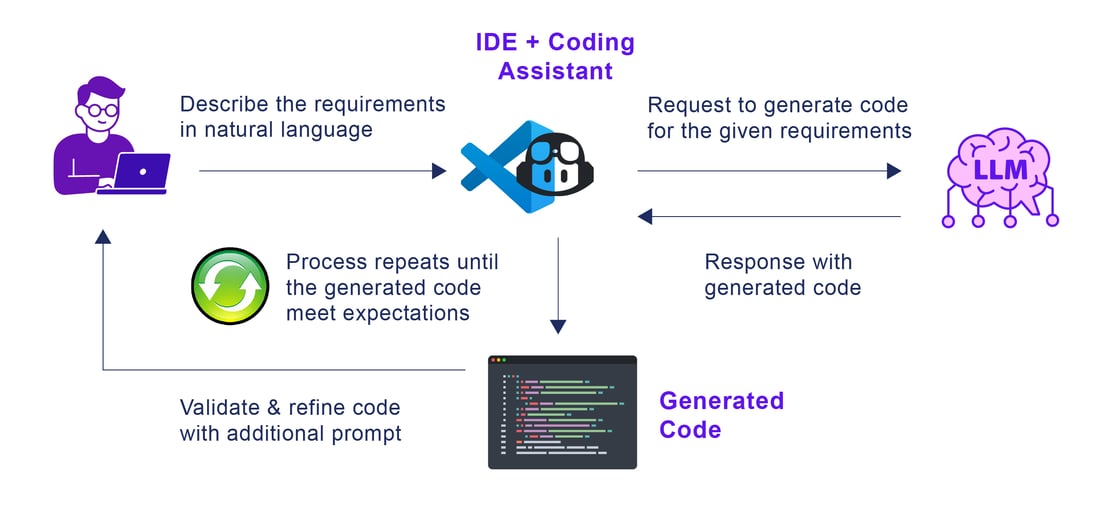
Vibe coding transforms natural language requirements into working code through AI assistants. Developers describe needs in plain English, AI generates code, and through iterative refinement, the solution evolves until requirements are met.
The promise: faster development cycles, reduced headcount needs, and coding democratization across non-technical teams.
But here's what vendors aren't telling you:
The Enterprise Reality Check
Technical Limitations
Vibe coding excels at prototypes but struggles with complex, interconnected enterprise systems requiring legacy integration and strict compliance.
Performance Gap
AI produces functional code quickly but rarely optimized code. Generated solutions typically require significant refactoring to meet production standards.
Debugging Difficulties
AI-generated code lacks consistent patterns, making troubleshooting time-consuming and creating hidden technical debt.
Maintenance Overhead
AI-generated codebases experience 300% higher churn rates, with every change introducing 400% more bugs compared to traditional development.
Security Vulnerabilities
The speed of AI generation often leads teams to skip thorough security audits, creating potential attack vectors.
Is Vibe Coding Worthless for Enterprises?
Not entirely. Strategic applications include:
Developing Prototypes
Compress weeks of concept validation into days
Proof of Concepts
Quickly demonstrate feasibility before committing significant resources
Developer Acceleration
Intelligent code completion for experienced developers
The Enterprise Alternative: Spec-Driven Development
For enterprise-grade applications, we need a more structured methodology to steer the AI toward our desired outcomes. To achieve this, we should adopt a Spec-Driven Development approach.
Key Components of Spec-Driven Development:
Comprehensive specifications define functionality, performance, security, and integration requirements upfront
AI operates within predefined architectural patterns, ensuring consistency and maintainability
Generated code is subject to the same rigorous review processes as human-written code, maintaining quality and compliance
How You Can Get Started:
Audit current processes to identify AI-suitable bottlenecks
Establish governance defining when/how AI tools are used
Pilot with low-risk internal projects
Train teams on AI capabilities and limitations
Need Help Getting Started? Let's set up a quick call to discuss more. Contact me at tino.mantella@relevantz.com and schedule a complementary consulting session with our experts.
Vibe coding is a major step forward, but it’s not the complete solution some vendors promise. For enterprise leaders, the key is using AI as a strategic tool within a disciplined development process—not as a replacement for engineering expertise.
The organizations that will benefit most are those that look past the hype, understand the limitations, and integrate AI thoughtfully into proven methodologies.
Check out our monthly podcast series "Leading with Relevance," featuring industry thought leaders every third Monday.